At a glance: A commercial roof installation in South Florida is scheduled around the permit review clock in Florida Statutes 553.792, the May 15 to October 15 wet season defined by the National Weather Service, and the tenants inside the building. This guide walks through each step from core samples to close-out, compares new construction, recover and tear-off scopes with their limits, lists what moves cost and schedule, explains the December 31, 2026 code change, and ends with a checklist each decision-maker can own.
The schedule for a commercial roof installation South Florida owners can rely on is set by the permit clock, the wet season and the people working inside the building, and the membrane, crew size and start date all follow from those three. An owner who signs a contract around a start date and leaves the permit, the notice of commencement and the phasing plan for later can lose weeks to a resubmittal, open a roof section into an afternoon storm, or run tear-off above a tenant who was never told. This article lays out the installation in the order the owner experiences it, from core samples to close-out, and names who controls each step. It does not set a duration for a specific building, quote Advanced Roofing prices, or decide which code edition, product approval or insurance outcome applies, because those determinations belong to the building official, the engineer of record and the owner’s insurer.
Why does late 2026 change how a South Florida commercial roof installation is planned?
A commercial roof installation in South Florida runs on two calendars at once in late 2026, the building code calendar and the weather calendar. The Florida Building Code, 9th Edition (2026) takes effect statewide on December 31, 2026, replacing the 8th Edition (2023), and the permit application date generally determines which edition governs a project. The Florida Roofing and Sheet Metal Contractors Association has published the approved 9th Edition changes to Existing Building Section 706.3, the section that decides when a new roof may be installed over an existing one.
As FRSA presents the modification, a tear-off to the deck is still required where roof system components are water-soaked or deteriorated, where two or more coverings already exist, and where blisters are not cut open and secured. A new exception would let an adequate lower substrate, such as sound high-R insulation, stay in place when the upper roof is removed. As of October 6, 2026, owners should treat that text as pending until the adopted code is published and read by their design professional.
The weather calendar is just as fixed. The National Weather Service Miami office defines the South Florida wet season as May 15 through October 15 and states that 60 to 70 percent of average yearly rainfall falls inside that window. Its 1991 to 2020 normals put wet-season rainfall at 44.84 inches in Miami, 37.49 inches in Fort Lauderdale and 36.30 inches in West Palm Beach. Hurricane season continues through November 30. A project permitted this fall and built between November and May works in the drier half of the year, and the code edition it falls under is fixed on the day the permit application is filed.
What happens, step by step, during a commercial roof installation?
A commercial roof installation is a sequence of investigation, design, permitting, tear-off, assembly and inspection, and each step depends on the one before it. The table lists the phases in the order the owner sees them, who controls each one, and what most often stalls it.
| Phase | What happens | Who controls it | What usually stalls it |
|---|---|---|---|
| 1. Investigation | Core samples, moisture survey, deck and drainage review, count of curbs and penetrations | Roofing contractor, roof consultant | Skipping cores, so wet insulation is found during tear-off |
| 2. Assembly design | Membrane, insulation, cover board, attachment and edge metal chosen as one approved assembly for the design wind pressure | Engineer of record or roof consultant | An assembly with no current product approval for the building’s pressure or zone |
| 3. Permit | Application with product approval numbers and attachment details; review by the building department | Building official | An incomplete application or a resubmittal request |
| 4. Notice of commencement | Recorded and posted before the first inspection | Owner | Recording left until after work is scheduled |
| 5. Mobilization | Staging, crane plan, access routes, tenant notices, fall protection set | Contractor and property manager | No agreed staging area or crane window |
| 6. Tear-off and dry-in | Old roof removed in sections no larger than can be closed the same day | Roofing foreman | Afternoon storms; unexpected wet insulation or deck damage |
| 7. Assembly | Deck repairs, insulation and cover board, membrane, flashings, edge metal | Roofing crew, sheet metal shop | Curb and penetration count; equipment that must be disconnected |
| 8. Inspections and close-out | Required inspections, manufacturer inspection, warranty registration, documents | Building official, manufacturer, contractor | Punch-list items left open |
The order matters because of how water moves through a roof. Water that enters an opened section travels sideways through the insulation well past the point where it entered, and saturated board loses thermal value, adds dead load and corrodes steel deck fasteners. It cannot be reliably dried in place. That is why a South Florida crew opens only as much roof as it can close before the afternoon storm cycle, and why the investigation phase belongs before the contract. Wet insulation found in cores is a scope item; wet insulation found during tear-off is a change order and a schedule slip.
Assembly design is where Florida differs most from national guidance. The Florida Product Approval search lets the designer filter roofing approvals by design pressure and by whether each one is approved inside or outside the High-Velocity Hurricane Zone, and an approval covers only the deck, insulation and attachment it lists. Perimeter and corner zones carry the highest uplift, so edge metal, coping and flashings are fabricated and fastened to the approved detail, often by an in-house commercial sheet metal fabrication shop.
Which installation scope fits the building: new construction, recover or tear-off?
Three scopes cover most South Florida commercial roof installations, and each has conditions where it is the wrong answer. The comparison below states the limits plainly, because a scope chosen for its first cost can produce a second roof early. Membrane selection is covered in detail in Advanced Roofing’s comparison of TPO vs PVC vs modified bitumen for occupied Florida buildings.
| Scope | Where it fits | Schedule profile | Where it falls short |
|---|---|---|---|
| New construction roof | New building or addition; deck installed by others | Tied to the general contractor’s schedule and deck completion | Roof often installed before rooftop equipment, so later trades can damage it without protection |
| Recover (new membrane over existing) | Single existing covering that cores show is dry and adequate as a base | Shorter; little tear-off or disposal; less weather exposure | Prohibited by Section 706.3 where coverings are water-soaked or two exist; HVHZ buildings follow separate sections; traps moisture if cores are skipped |
| Full tear-off and replacement | Wet insulation, deck damage, two coverings, or end of service life | Longest; daily production capped by same-day dry-in | Highest first cost; most noise and tenant disruption; hidden deck conditions appear only after removal |
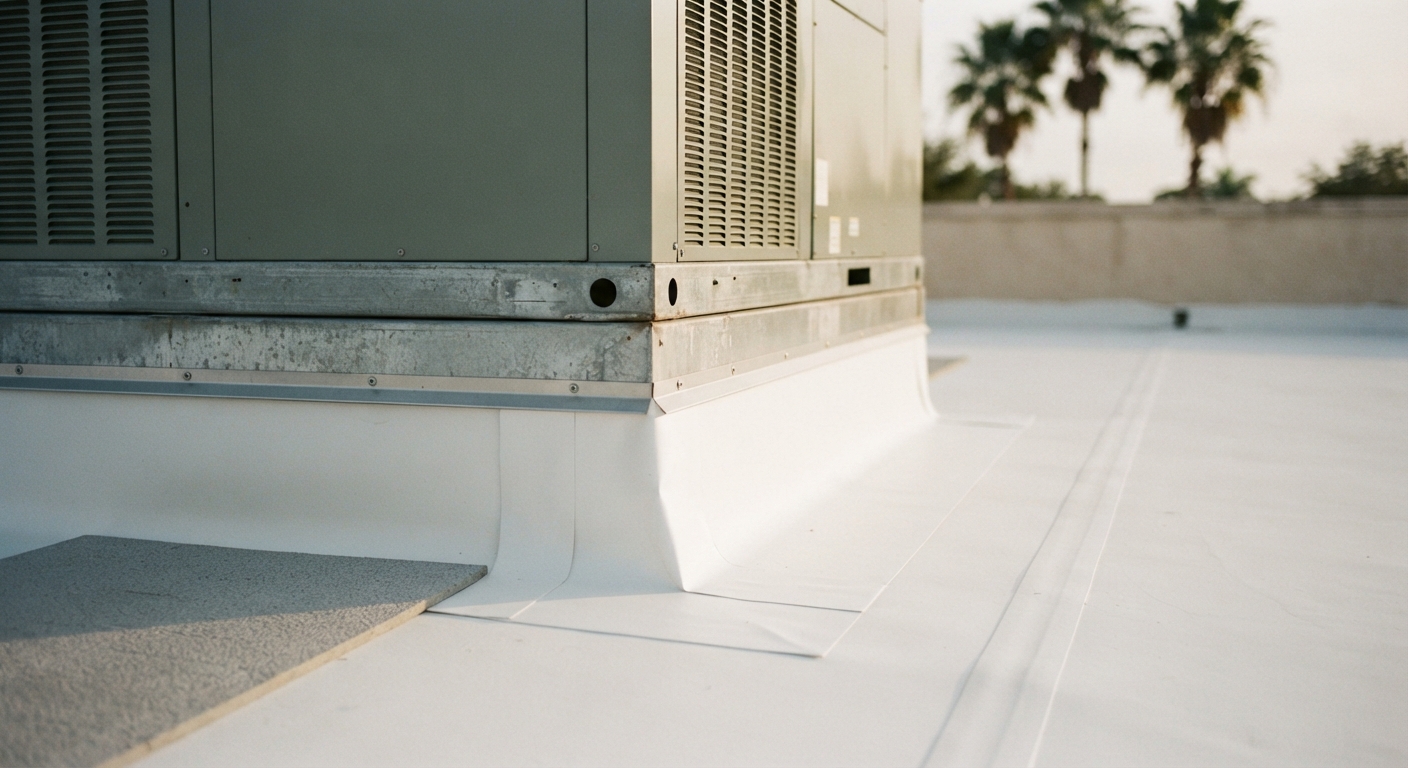
For a new building, the new construction commercial roofing scope is coordinated with the deck, curbs and rooftop equipment so penetrations are flashed once. For an existing building, the choice between recover and tear-off is a condition question that the cores answer, and Advanced Roofing’s commercial re-roofing for occupied buildings starts there. A recover is never the right call for a roof that is already wet, however attractive the schedule looks on paper.
What sets the cost and timeline of a commercial roof installation South Florida owners schedule?
The cost and timeline of a commercial roof installation are set by the condition of what is under the membrane, the approved assembly, the permit path and the access the building allows. Advanced Roofing does not publish pricing; its 2026 commercial roofing cost guide for Florida builds a budget from the assembly up using attributed third-party figures. The table lists the drivers that move both numbers and where each figure comes from.
| Driver | Effect on schedule | Effect on cost | Source or owner of the figure |
|---|---|---|---|
| Permit review window | Local government must act within set business-day limits once an application is complete and sufficient, unless the applicant waives them in writing | Fee reductions apply if the deadline is missed | F.S. 553.792 (2026); local ordinance may be shorter |
| Completeness notice | Department must say within 5 business days what is missing from an application | Resubmittals add review cycles | F.S. 553.792(1)(c) |
| Wet insulation share from cores | Every wet area is torn off and rebuilt, slowing daily production | Largest variable line in most replacements | Core samples and moisture survey |
| Season | 60 to 70 percent of yearly rain falls May 15 to October 15 | Weather days and temporary protection | NWS Miami wet-season definition |
| Curbs, penetrations and equipment | Each needs flashing; some need disconnect and reset | Labor and mechanical coordination | Contractor count from the roof survey |
| Occupancy limits | Off-hours crane picks and quiet hours cut productive time | Premium time and staging | Property manager and contractor |
Two rules keep the numbers honest. Ask every bidder for unit prices on wet insulation and deck replacement, so hidden conditions are priced before they are found. Ask for a phased schedule that names the permit date assumption and the number of weather days carried, so a bid that looks faster is not simply assuming dry weather.
What changes when tenants stay inside during the installation?
Most South Florida commercial roofs are replaced over occupied buildings, and the installation is planned around the people below. Advanced Roofing’s re-roofing service page states that the company schedules around business hours and offers night and weekend installations when necessary. The practical steps an owner should expect are listed below, in the order they happen.
- A pre-construction meeting sets staging areas, access routes, shutdown windows and a single contact for tenants.
- Tear-off areas are sized so each section is closed the same day, with temporary protection staged ahead of afternoon storms.
- Crane picks over entrances and parking are scheduled outside business hours where the site allows; the in-house commercial roofing crane division removes one outside vendor from that plan.
- Adhesives and hot work are sequenced around rooftop air intakes so odors stay out of occupied space, with the mechanical contractor coordinating unit shutdowns.
- Daily cleanup and photo progress reports give the property manager one record of what was opened, closed and inspected.
Fall protection is part of the tenant plan as well as the crew plan. OSHA 29 CFR 1926.501(b)(10) requires protection for roofing work on low-slope roofs with edges 6 feet or more above a lower level, and OSHA 29 CFR 1926.502 sets warning lines at least 6 feet from the roof edge and bars storing materials within 6 feet of an edge unless guardrails are erected. Those setbacks determine where pallets land and where a crane can set loads, so they belong in the staging plan the property manager approves. In Miami-Dade and Broward, the building also sits in the High-Velocity Hurricane Zone; local work runs through the Miami commercial roofing and Fort Lauderdale commercial roofing offices.
Which permit, lien and code dates control a 2026 to 2027 installation?
As of October 6, 2026, four dated items control the paperwork side of a South Florida commercial roof installation. Each should be re-checked on the day the permit application is filed.
- Florida Building Code, 9th Edition, effective December 31, 2026. The permit application date generally decides the governing edition. The revised Section 706.3 recover rules should be read from the adopted code before a recover is designed around them.
- Permit review clocks. Florida Statutes section 553.792 (2026) sets maximum review windows, including 60 business days for nonresidential buildings under 25,000 square feet, requires a completeness notice within 5 business days, and reduces the permit fee by 10 percent for each business day a deadline is missed unless an exception applies.
- Notice of commencement. Florida Statutes section 713.13 requires the owner to record a notice of commencement before work begins, unless exempt, and the statutory form states it must be recorded and posted on site before the first inspection. A notice is void if work does not start within 90 days of recording, and it expires one year after recording unless a later date is stated. Owners with construction financing should talk to their lender or attorney first.
- HVHZ requirements. In Miami-Dade and Broward, Florida Building Code Sections 1512 through 1525 govern roofing, and Miami-Dade Notice of Acceptance approvals apply. Which assembly meets the design pressure is a determination for the engineer of record and the building official.
Commercial roof installation checklist: who owns each step?
Assign each item to a named person before bids go out, so the schedule has an owner for every dependency.
- Facility or property manager: order core samples and a moisture survey before requesting bids; a commercial drone roof survey gives the consultant an overhead record of curbs, drains and ponding.
- Roof consultant or engineer of record: name one approved assembly with its product approval or NOA number and design pressures, including corners and perimeter.
- Owner or asset manager: decide whether the permit should be filed before or after December 31, 2026, with the design professional’s advice on which edition benefits the scope.
- Owner: record and post the notice of commencement before the first inspection, after checking with the lender if the project is financed.
- Procurement: compare bids on the same assembly, unit prices and weather-day assumptions, using the steps in how to select a commercial roofing contractor. A statewide contractor built for occupied buildings may not be the lowest bid on a small, simple roof.
- Property manager: approve the staging plan, crane windows, tenant notices and the storm-protection plan, and keep the commercial roof hurricane season guide at hand if an open section meets a named storm before November 30.
- Operations: fund commercial roof maintenance and the inspections the manufacturer warranty requires after close-out.
Frequently Asked Questions
How long does a commercial roof installation take in South Florida?
There is no single duration. Field time depends on roof area, whether the scope is a recover or a tear-off, how much wet insulation the cores find, the number of curbs and penetrations, and weather days. Before field work starts, Florida Statutes 553.792 allows up to 60 business days of permit review for nonresidential buildings under 25,000 square feet unless local rules are shorter. Ask each bidder for a phased schedule.
When is the best time of year to install a commercial roof in South Florida?
The National Weather Service Miami office defines the South Florida wet season as May 15 through October 15, when 60 to 70 percent of yearly rain falls, so the drier months reduce weather days and temporary protection. Roofs are installed year-round with same-day dry-in. Hurricane season runs through November 30, and permit timing around December 31, 2026 also affects which code edition applies.
Do I need a notice of commencement for a commercial roof installation in Florida?
In most cases, yes. Florida Statutes 713.13 requires the owner to record a notice of commencement before improving real property unless the work is exempt, and the statutory form says it must be recorded and posted on the site before the first inspection. The notice is void if work does not begin within 90 days of recording. Lenders and attorneys should review it on financed projects.
Can a new commercial roof be installed over the existing roof in Florida?
Sometimes. Florida Building Code Existing Building Section 706.3 requires removal to the deck where components are water-soaked or deteriorated, where two or more coverings exist, or where blisters are not opened and secured, and HVHZ buildings follow Sections 1512 through 1525. Core samples and a moisture survey should come before any recover bid. The 9th Edition text is pending until December 31, 2026.
Does a building have to close during a commercial roof replacement?
Most occupied commercial buildings stay open. Work is phased so each opened section is closed the same day, crane picks are scheduled outside business hours where the site allows, and odor-producing work is sequenced around rooftop air intakes. Spaces with strict environmental controls, such as operating rooms or data rooms, need a specific plan with the facility team before the schedule is set.
What does an HVHZ commercial roof installation require in Miami-Dade and Broward?
Buildings in Miami-Dade and Broward are in the High-Velocity Hurricane Zone, where Florida Building Code Sections 1512 through 1525 govern roofing and Miami-Dade Notice of Acceptance product approvals apply. The approved assembly, attachment pattern and edge details must match the building’s design pressures. The engineer of record and the building official decide whether a specific assembly complies.
Schedule the roof around the permit, the season and the tenants
A South Florida commercial roof installation stays on schedule when the dependencies outside the crew’s control are settled first. The cores decide whether the scope is a recover or a tear-off, the approved assembly and the permit date decide which code applies, the wet season decides how many weather days to carry, and the tenants decide when the crane can fly and where the pallets land. With the 9th Edition arriving December 31, 2026, the filing date belongs on that list. Owners who settle those items before bidding get proposals that price the same roof on the same calendar, and a schedule they can defend to the people who approve it.
Written by The Technical Team at Advanced Roofing. Established in 1983, Advanced Roofing is 100% employee-owned and was ranked the #13 largest roofing contractor in the U.S. on Roofing Contractor magazine’s 2026 Top 100 list, announced in August 2026.
To plan a commercial roof installation on your building, request a free commercial roofing quote online or call (800) 638-6869.