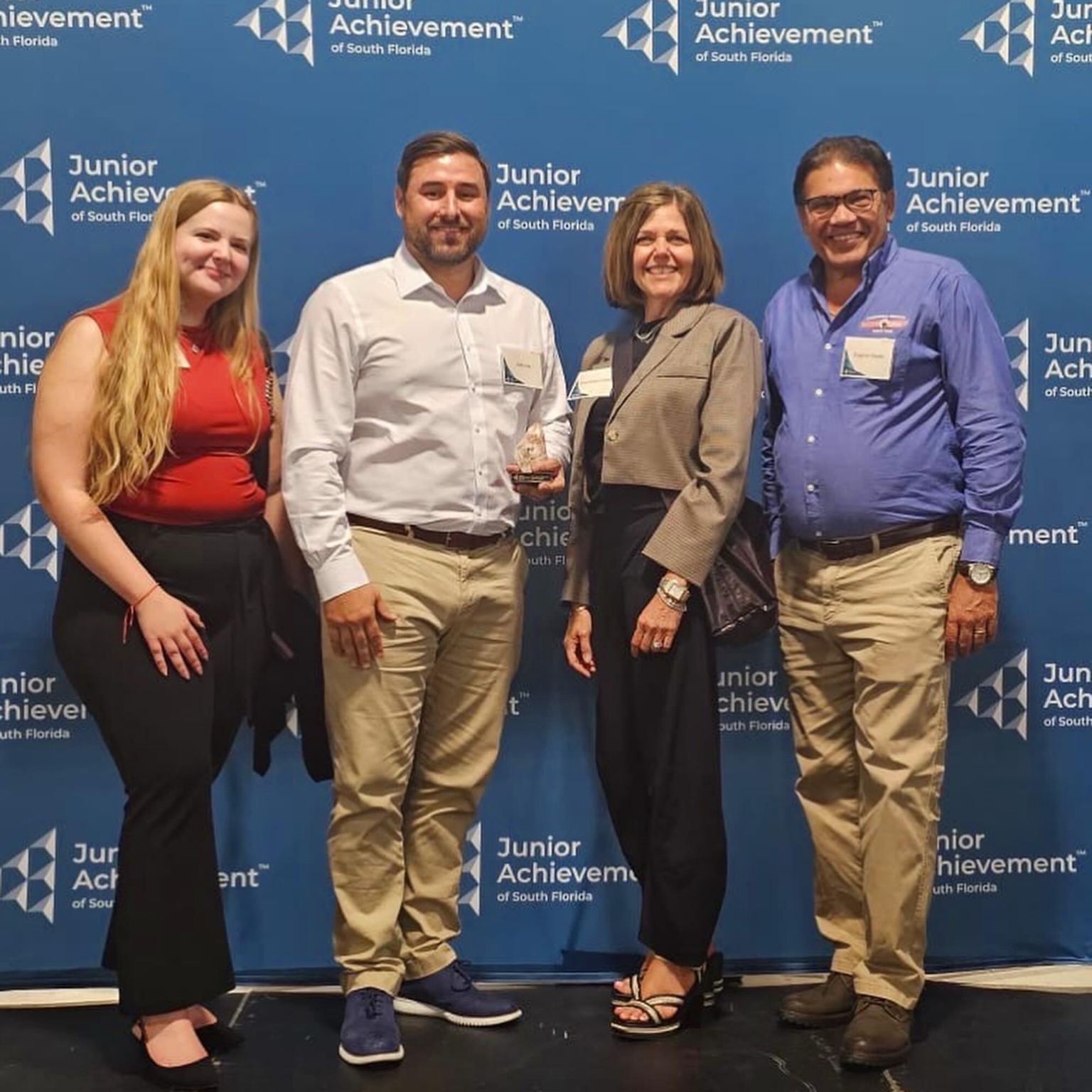
At a glance: Advanced Roofing received the Skilled Trades Impact Award from Junior Achievement of South Florida at its Summer Celebration in August 2026. This article explains what the recognition reflects, how a South Florida student moves from career exposure through pre-apprenticeship and registered apprenticeship onto a commercial roofing crew, how each workforce strategy falls short on its own, and why crew training matters on an occupied building. It closes with a checklist of workforce questions owners and boards can ask any roofing contractor.
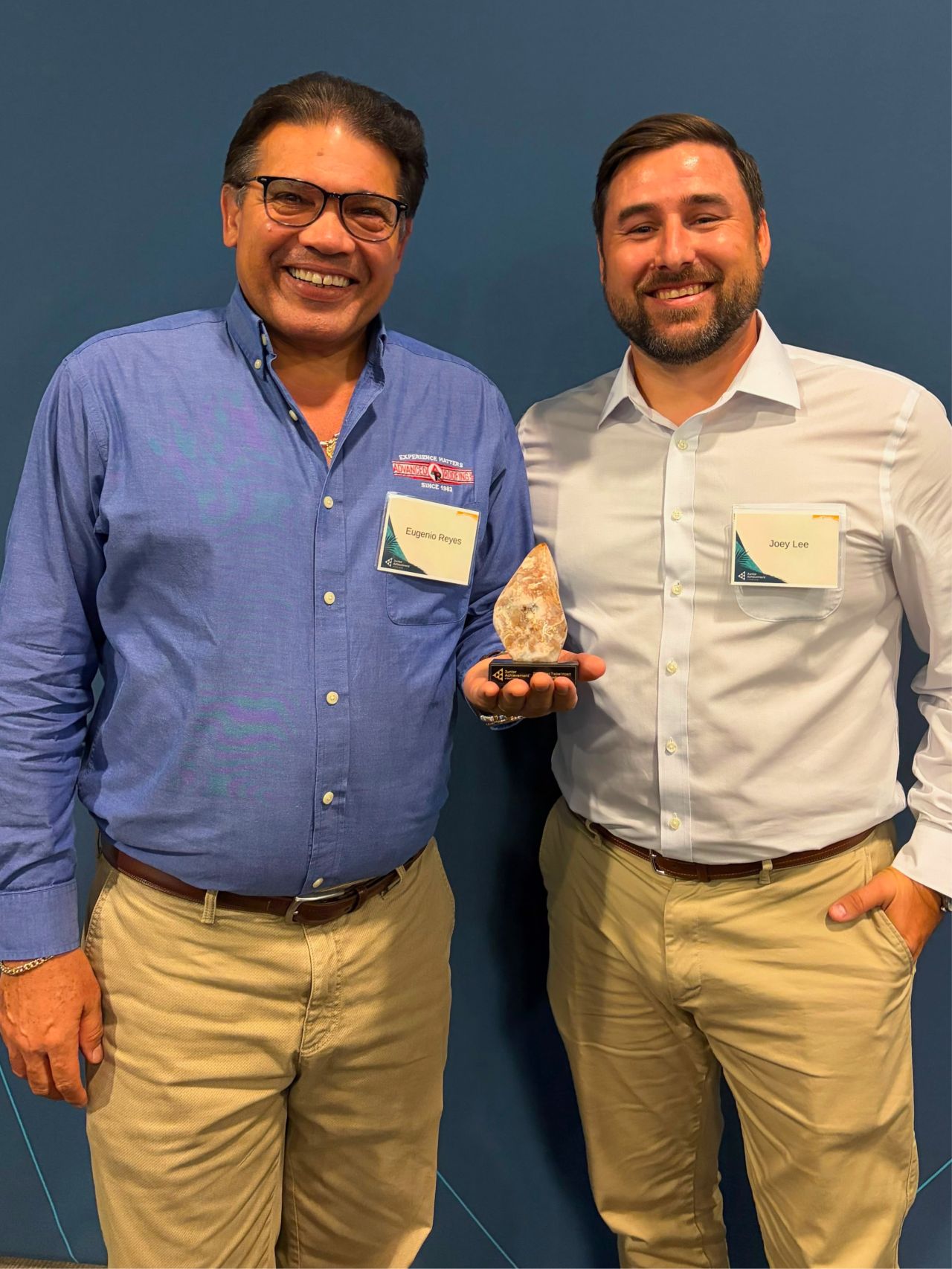
Advanced Roofing received the Skilled Trades Impact Award from Junior Achievement of South Florida at the organization’s Summer Celebration in August 2026, and the recognition supports a practical argument that the quality of a commercial roof depends on the training of the people who install it, and that training starts years before anyone steps onto a jobsite. For a building owner, a thin supply of trained roofers means longer lead times, stretched crews, and workmanship defects that surface later. This article does not claim that one contractor’s outreach closes an industry-wide labor gap, and it does not rank contractors; it explains what the award reflects, how South Florida’s trades pipeline works, and what owners can ask about the people who will be on their roof.
Advanced Roofing is a 100% employee-owned company with more than 750 employee-owners across seven Florida locations. It treats training as a long-term investment because today’s apprentices become the crew leads and superintendents who will run occupied-building reroofs a decade from now. The award belongs to those employee-owners, and the company thanks Junior Achievement for the recognition and its continued work to prepare future talent.
What does the Skilled Trades Impact Award from Junior Achievement recognize?
The Skilled Trades Impact Award is a recognition from Junior Achievement of South Florida that Advanced Roofing received at the organization’s Summer Celebration in August 2026. Advanced Roofing connects the award to its support for workforce development initiatives and to the career opportunities it creates for people entering the skilled trades, including roofing apprenticeships in South Florida.
Junior Achievement of South Florida is a nonprofit that teaches work readiness, financial literacy, and entrepreneurship to students in Broward and south Palm Beach counties, using volunteers from local businesses. Advanced Roofing lists Junior Achievement among its community service commitments, and the relationship includes hands-on instruction. The National Roofing Contractors Association reported in June 2025 that Advanced Roofing founder Rob Kornahrens led a workshop at Junior Achievement of South Florida covering safety standards, roofing fundamentals, and diagnostic technology, during which students assembled a TPO roof system.
The recognition arrives while the construction workforce is struggling to replace itself. Associated Builders and Contractors estimated in its January 15, 2026 workforce shortage analysis that the U.S. construction industry needs to attract about 349,000 net new workers in 2026 and 456,000 in 2027, based on its model linking construction spending to employment. Roofing carries its own share of that demand. The U.S. Bureau of Labor Statistics projects in its Occupational Outlook Handbook profile for roofers about 12,000 openings for roofers each year, on average, from 2025 to 2035, with many created by workers who retire or leave the occupation. Neither figure is specific to Florida or predicts conditions on a particular project; both describe a national market in which a contractor’s own training pipeline decides how much of its crew capacity depends on outside hiring.
How does a South Florida student become a commercial roofer?
A commercial roofer in South Florida typically moves through four stages: early career exposure, pre-apprenticeship, registered apprenticeship, and advancement on a crew. A different organization runs each stage, and a weak link at any one of them reduces the number of people who reach a roof ready to work safely. Junior Achievement of South Florida runs the first two stages for many local students. Its JA Career Discovery Park at the JA World Huizenga Center in Coconut Creek serves up to 16,000 eighth-grade students a year from Broward and south Palm Beach counties. Its JA Pre-Apprenticeship Program is a six-month, work-based learning program for young adults ages 17 to 24, with a construction career track and tuition-free certifications that include OSHA 10, flagger, and forklift training.
The U.S. Department of Labor describes pre-apprenticeship as a program designed to prepare individuals to enter and succeed in a Registered Apprenticeship Program, which is a paid job that combines on-the-job learning with classroom instruction and leads to a portable, nationally recognized credential. Advanced Roofing is a founding member of the ABC Roofing Apprenticeship Program, established in 2015 to grow the pool of skilled roofers in South Florida, and the company states that it pays for apprentices’ program classes. The company announced the graduation of its 2024 apprenticeship class, and its careers page describes paths from apprentice to foreman, superintendent, and project manager.
Roofing skill develops on the roof as much as in the classroom. The Bureau of Labor Statistics classifies roofing as an occupation learned through moderate-term on-the-job training, with trainees starting on tasks such as carrying equipment and erecting scaffolds before they learn to measure, cut, and fit materials. On a low-slope commercial roof, that progression extends to heat-welding membrane seams, flashing curbs and penetrations, and fastening edge metal to a specified pattern. An owner cannot see those details once the roof is finished.
| Pipeline stage | Who runs it | Who it serves | What it builds | Source |
|---|---|---|---|---|
| Career exposure | JA Career Discovery Park, Coconut Creek | Eighth graders in Broward and south Palm Beach counties; up to 16,000 per year | Awareness of career paths, work readiness | Junior Achievement of South Florida (accessed Nov 21, 2026) |
| Pre-apprenticeship | JA Pre-Apprenticeship Program | Ages 17 to 24 in Broward or Palm Beach County | Six months of work-based learning; OSHA 10, flagger, forklift, CPR certifications | Junior Achievement of South Florida (accessed Nov 21, 2026) |
| Registered apprenticeship | ABC Roofing Apprenticeship Program with sponsoring contractors | Employed apprentices age 18 and older | Paid on-the-job learning plus classroom instruction; nationally recognized credential | U.S. Department of Labor; Advanced Roofing careers page |
| Crew advancement | The employing contractor | Apprenticeship graduates and experienced roofers | Crew lead, supervision, and project management roles | Advanced Roofing careers page |
Which workforce strategies build a reliable roofing crew, and where do they fall short?
Every roofing contractor staffs projects through some mix of training, hiring, and subcontracting, and each approach has limits. Career-exposure programs reach thousands of students but convert slowly, because an eighth grader is years from a jobsite. Pre-apprenticeship narrows that gap, and it depends on employers willing to hire and train its graduates. Registered apprenticeship produces the most consistent skill set, and it requires years of investment in people who may later leave for another employer. Hiring experienced roofers fills a crew quickly, and the hiring contractor inherits whatever habits those roofers learned elsewhere. Subcontracted labor adds capacity for peaks while adding a layer between the owner’s contractor and the people doing the work.
No single strategy is sufficient, and size alone does not settle the question. A smaller roofer with a stable, long-tenured crew can deliver excellent workmanship on a simple building, and a statewide contractor built for occupied commercial projects may not be the lowest bid on that kind of job. The narrower question for an owner is who will be on this roof, how that crew was trained, and who supervises it each day.
| Workforce strategy | What it does well | Where it falls short |
|---|---|---|
| Career exposure (for example, JA Career Discovery Park) | Reaches large numbers of students early; makes trade careers visible | Long lag before students reach a jobsite; outcomes are hard to trace to any one employer |
| Pre-apprenticeship | Builds safety certifications and work habits before hire | Six months of preparation is not trade skill; depends on employers hiring graduates |
| Registered apprenticeship | Structured on-the-job learning plus classroom instruction; recognized credential | Multi-year commitment; trained workers can leave for other employers |
| Hiring experienced roofers | Adds crew capacity quickly | Skills and safety habits vary; competes in a tight labor market |
| Subcontracted crews | Covers peak demand | Less direct control over training and supervision; adds a handoff on the owner’s project |
How does a contractor’s workforce affect a roofing project’s schedule, cost, and quality?
Labor supply reaches a roofing budget and schedule through a few specific channels. Associated Builders and Contractors stated in its January 2026 analysis that failing to attract enough workers would worsen shortages in certain occupations and regions and put upward pressure on labor costs. The drivers below determine how much of that pressure reaches an individual project.
- Crew availability in peak periods. Storm recovery and year-end capital work compete for the same crews; a contractor with its own trained workforce depends less on outside labor to hold a start date.
- Supervision ratio. The number of experienced leads per crew determines how closely newer workers are checked at seams, flashings, and terminations.
- Rework. Workmanship defects at penetrations and perimeters can surface at the manufacturer’s final inspection or after the first heavy rain, and correcting them costs schedule time on an occupied building.
- Wage levels. The Bureau of Labor Statistics reports a median annual wage for roofers of $55,440 in May 2025; the figure is national, covers all roofing sectors, and is not a proxy for any contractor’s pricing.
- Safety performance. Crews that follow fall protection procedures consistently have fewer work stoppages.
None of these drivers sets a price on its own. Advanced Roofing does not publish pricing, and project cost depends on roof area, roof system, deck condition, access, and the code requirements identified during a site assessment.
What does a trained roofing crew change on an occupied Florida building?
On an occupied building, crew training shows up in the daily routine more than in the finished roof. Advanced Roofing specializes in commercial re-roofing for occupied buildings, working around business hours and offering night and weekend installation when a facility needs it. That depends on crews that tear off only what they can dry-in the same day, keep fumes away from air intakes, keep entrances and fire lanes clear, and remove debris before the building opens.
Florida adds conditions that a less experienced crew may not anticipate. Summer afternoon thunderstorms shorten the working window and make same-day dry-in a requirement. Buildings in Miami-Dade and Broward counties fall within the High-Velocity Hurricane Zone, where roofing products need approval for that zone and installation follows the HVHZ sections of the Florida Building Code; the building official and the engineer of record make the compliance determinations. Coastal salt air corrodes fasteners and edge metal faster than inland exposure, which raises the stakes on correct metal selection and attachment.
Safety training carries equal weight. OSHA’s fall protection guidance states that the agency requires fall protection at six feet in the construction industry and directs employers to train workers about job hazards in a language they understand. A worker who arrives with OSHA 10 training from a pre-apprenticeship and builds on it through an apprenticeship and a company safety program is better prepared for warning-line setbacks, guardrails at roof edges, and safe material hoisting beside an occupied entrance.
Which code and training requirements affect Florida roofing crews heading into 2027?
The Florida Building Code changes editions at the end of this year. As of November 2026, the Florida Building Commission’s schedule keeps the 8th Edition (2023) in effect until the 9th Edition (2026) takes effect on December 31, 2026, and the permit application date generally determines which edition governs a project. FRSA has reported approved modifications to the reroofing provisions in the existing-building volume, so crews and project managers need to learn the adopted text before they work under it. Owners should confirm the governing edition for their permit with the building official.
On the training side, a registered apprenticeship is validated by the U.S. Department of Labor or a State Apprenticeship Agency. Advanced Roofing’s careers page states that graduates of its apprenticeship receive a State Certified Roofing Technician Certification approved by the Florida Department of Education. Licensing, permitting, and inspection apply to every project regardless of how the crew was trained.
What should owners and boards ask a roofing contractor about its workforce?
These questions complement a standard guide on how to select a roofing contractor and focus on the people who will do the work.
- Facility manager: ask who the superintendent and crew lead will be, their tenure with the company, and whether both stay from mobilization to closeout.
- Property manager: ask how the contractor trains new crew members, whether it sponsors a registered apprenticeship, and how apprentices are supervised on the roof.
- Risk or safety manager: request the site-specific fall protection plan and confirm the crew’s current safety training, such as OSHA 10 or OSHA 30.
- Procurement officer: ask whether the crew is the contractor’s own or a subcontractor, and name the supervising personnel in the contract.
- Condo board or community association manager: request references from occupied buildings of similar type and size, and the manufacturer certifications held for the specified system.
- Owner’s roof consultant: review the contractor’s quality-control process, including daily photo documentation and pre-warranty inspections.
Frequently Asked Questions
What is the Skilled Trades Impact Award?
The Skilled Trades Impact Award is a recognition from Junior Achievement of South Florida. Advanced Roofing received it at Junior Achievement’s Summer Celebration in August 2026. The company connects the award to its support for workforce development and the career opportunities it creates in the skilled trades, including its role as a founding member of the ABC Roofing Apprenticeship Program.
What does Junior Achievement of South Florida do?
Junior Achievement of South Florida is a nonprofit that teaches work readiness, financial literacy, and entrepreneurship to students in Broward and south Palm Beach counties. Its programs include JA Career Discovery Park for eighth graders and a six-month Pre-Apprenticeship Program for ages 17 to 24 with a construction track and OSHA 10 certification.
How do you become a commercial roofer in Florida?
Most commercial roofers in Florida start in an entry-level crew position and learn on the job, and many complete a registered apprenticeship that combines paid work with classroom instruction. Pre-apprenticeship programs prepare young adults for that step with safety training and work-readiness skills. The Bureau of Labor Statistics reports that no formal educational credential is typically required to start as a roofer.
Does Advanced Roofing offer a roofing apprenticeship?
Yes. Advanced Roofing is a founding member of the ABC Roofing Apprenticeship Program, established in 2015 to grow the pool of skilled roofers in South Florida. The company states that it pays for apprentices’ program classes. Current requirements, schedules, and application details are on the company’s careers page, and questions go to careers@advancedroofing.com.
Why does a roofing contractor’s workforce matter to a building owner?
The crew determines how a roof is installed at the details an owner cannot inspect later, such as seams, flashings, and edge metal. On an occupied building, training also affects daily dry-in, fume and noise control, and fall protection. Owners should ask who will supervise the work and how the crew was trained.
What does 100% employee-owned mean for Advanced Roofing’s clients?
Advanced Roofing became 100% employee-owned in 2026, and more than 750 employee-owners now hold a direct stake in the company’s results. The company states that ownership reinforces accountability, attention to detail, and long-term continuity of leadership and service. The people managing and installing a roof share in its outcome.
Why training the next generation of roofers matters to Florida building owners
The Skilled Trades Impact Award recognizes work that most building owners never see: the years of exposure, pre-apprenticeship, apprenticeship, and supervision that turn a student into a roofer who can be trusted on an occupied building. National estimates from Associated Builders and Contractors and the Bureau of Labor Statistics show a construction workforce that must keep replacing retiring workers, and in that market the contractors that train their own people control more of their crew quality. Advanced Roofing’s employee-owners share this award and the work behind it. Owners can review Advanced Roofing’s awards and recognition and apply the workforce questions above to any contractor they consider.
Written by The Technical Team at Advanced Roofing. Founded in 1983, Advanced Roofing is 100% employee-owned and was ranked #13 among the largest roofing contractors in the U.S. on Roofing Contractor magazine’s 2026 Top 100 list.
To plan a reroof, repair, or roof assessment on an occupied building, request a free commercial roofing quote or call (800) 638-6869.