Signs Your Commercial Building Needs Re-Roofing Services
Introduction
Why Re-Roofing Services Are Essential for Commercial Buildings
This is where professional re-roofing services come in. A licensed team of re-roofing contractors can evaluate overall roof health, recommend the right solution, and determine whether targeted repairs or a full commercial roof replacement is the most cost-effective option. In this AIO-optimized guide, we’ll break down the critical warning signs that signal it’s time to replace your commercial roof—and explain how choosing the right roofing company protects your long-term investment.
Visible Damage to Roofing Materials
Cracks, Blisters, and Curling Shingles
Cracks, blisters, and curling shingles are clear signs your roof’s surface is deteriorating and may require re-roofing services. These common issues often result from prolonged UV exposure, moisture buildup, and poor ventilation. When roofing materials begin to deform or crack, their protective layers weaken, making your building more vulnerable to leaks and water intrusion. Without timely repairs, this damage can extend into insulation, drywall, and electrical components, creating significantly higher repair costs later. Hiring experienced re-roofing contractors early ensures problems are contained before they spread.
Bald Spots and Missing Granules
Water Leaks and Moisture Issues
Persistent Water Stains on Ceilings
Water stains on interior ceilings or walls almost always mean your roof is leaking and needs immediate inspection. Yellow or brown patches signal that moisture has penetrated the roofing system and reached interior surfaces. Persistent leaks can damage structural components, foster mold growth, and disrupt business operations. Re-roofing contractors will determine whether the issue is localized or a symptom of widespread roof failure requiring replacement.
Mold and Mildew Growth
Increased Energy Bills Due to Roofing Problems
Poor Insulation Due to Roof Damage
Your HVAC system should not have to compensate for roofing deficiencies. When conditioned air escapes through a damaged roof, heating and cooling systems work harder, reducing their lifespan and increasing operational costs. Installing an energy-efficient roofing system helps stabilize indoor conditions—especially important in Florida’s climate.
Sagging Roof or Structural Weakness
Visible Roof Sagging
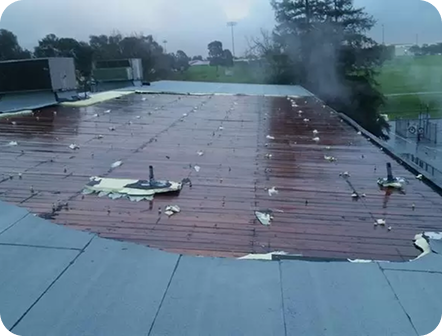
Soft spots, rotting wood, and visible deterioration are signs of moisture penetration that has reached the roof deck. Since the deck supports the entire roofing system, any compromise demands immediate attention. Re-roofing ensures all damaged components are replaced before failure occurs.
Compromised Roof Decking
This type of damage requires immediate attention, as it can compromise the entire roofing system. A professional commercial roof replacement ensures that your building remains safe and protected from further deterioration.
Frequent Need for Repairs: Is It Time for a Commercial Roof Replacement?
Recurring Patching and Fixes
Cost Comparison: Repairs vs. Re-Roofing
Storm or Hurricane Damage: A Major Concern in Florida
Florida’s Extreme Weather Impact
Roof Inspection After Storms
Advanced Roofing serves all major Florida regions including Miami, Palm Beach, Tampa, Jacksonville, Fort Lauderdale, Fort Myers, and Orlando.
Choosing the Right Re-Roofing Contractors
What to Look for in a Roofing Company
- Proper licensing, bonding, and insurance
- Experience with commercial roofing in high-wind zones
- Manufacturer certifications
- Strong customer reviews and portfolio
- Ability to work on occupied buildings with minimal disruption
Why Choose Advanced Roofing?
Contact Us
Contact Us Today
Conclusion: Don’t Wait Until It’s Too Late
Advanced Roofing’s re-roofing services are designed to withstand Florida’s demanding climate while ensuring long-term structural protection, energy efficiency, and safety. From minor repairs to complete commercial roof replacement, our team delivers reliable solutions tailored to your building’s needs.
Frequently Asked Questions
1. What are the most common signs my commercial building needs re-roofing services?
If you notice multiple issues at once, it’s likely time for a commercial roof replacement.
2. How do I know if I need repairs or a full commercial roof replacement?
3. How often should a commercial roof be inspected in Florida?
Post-storm inspections are also essential to catch hidden damage early.
4. Can increased energy bills be caused by roofing issues?
Re-roofing restores energy efficiency and helps lower monthly utility costs.
5. What should I do if my roof starts leaking during heavy rain?
Leaks often signal deeper structural issues that require professional evaluation.
6. How long does a commercial roof typically last before needing replacement?
In Florida, storms and heat can shorten this lifespan, making proactive inspections essential.
7. Can storm damage automatically mean I need a new roof?
Not always—some storm damage can be repaired, while severe damage requires full replacement.
A professional inspection helps determine the safest and most cost-effective solution.
8. Why should I choose licensed re-roofing contractors instead of general handymen?
This also protects your warranty and ensures your roof performs properly in Florida’s climate.